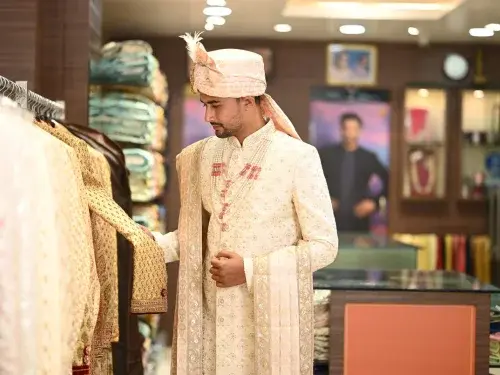
Tissue Sherwani vs Raw Silk Sherwani vs Banarasi Silk Sherwani: Which Fabric Should You Choose?
- Kanta Khemani

- May 7
- 7 min read
Today, many Bollywood grooms are no longer wearing the same-old ivory sherwanis, but opting for rich textures and lavish fabrics instead. Whether Rajkummar Rao in the textured raw silk sherwani or Sidharth Malhotra in the opulent Banarasi silk sherwani, it is the fabric choice that steals the spotlight of wedding fashion.
The sherwani fabric you choose plays an important role as it shapes the final look of the outfit. On top of that, it also impacts the comfort and whether the fabric is suitable for the occasion.
From an airy vibe to a classic look, and all the way to an authentic traditional aesthetic, the choice of your fabric for the sherwani is the first step towards making the perfect look. The Tissue sherwani offers a modern feel with its lightness, while the raw silk and Banarasi silk offer classic and luxurious looks, respectively.
How to Choose the Right Sherwani Fabric
Before moving on to the different types of fabrics used in making the perfect sherwani for wedding, it is necessary to know what one needs to consider when choosing the right sherwani.
The fabric that you choose for your sherwani will determine everything, right from the way it photographs to the comfort that you will enjoy through the event. Some fabrics drape softly and feel light, while others hold a sharp silhouette with more weight. The season is another factor that cannot be overlooked. Opt for breathable fabrics for summer events, while thicker materials are better suited to colder seasons.
Moreover, your fabric should also complement the occasion. For example, for day weddings and outdoor mehendi ceremonies, fabrics that are lighter are better and more comfortable options. But, for evening receptions and grand wedding ceremonies, fabrics that give you a good structured look are better suited.
Tissue Sherwani: Lightweight with a Subtle Shine
What is Tissue Fabric?
Tissue is a lightweight and semi-transparent fabric with a metallic sheen interwoven into its weave. Its appearance isn't too dazzling. Instead, think of it as classy elegance. This material is soft and airy, making it ideal for a groom who wants to appear refined yet comfortable.

How Tissue Fabric Looks and Feels
The Tissue fabric is famous for its lightweight and breathable properties. So, once you put on a tissue sherwani, you will notice that it does not trap heat like heavy silks. Hence, this property makes it perfect for outdoor wedding venues or summer celebrations. This material's soft shimmer adds an elegant touch when it reflects light. Additionally, its graceful drape is very flattering.
Best Occasions to Wear a Tissue Sherwani
A tissue sherwani would be best suited for:
Outdoor weddings where sunlight enhances the metallic glitter.
Mehendi or Haldi parties, where ease of movement is essential.
Outdoor events or events held during the summer, where comfort is paramount.
Pros & Cons
The Tissue fabric is soft and comfortable to wear for extended periods. Moreover, it gives a modern appearance with easy movement and dancing. However, sherwanis made from the Tissue fabric are less structured and could appear too subtle for grand occasions.
Raw Silk Sherwani: Structured and Classic
Understanding Raw Silk Texture and Structure
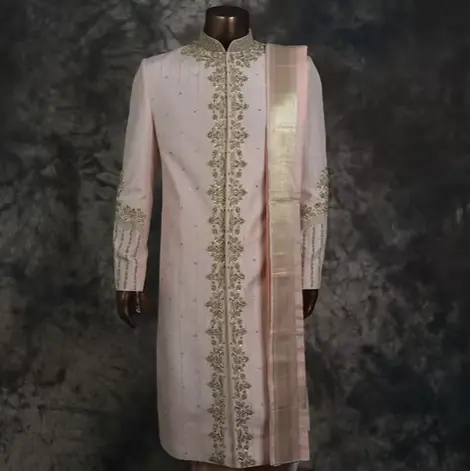
Raw silk is a form of silk which has a slightly textured finish with a matte look. Unlike traditional silk, which shines, Raw silk fabric gives the sherwani a more rustic feel and a firmer structure.
When Raw Silk Works Best
The Raw silk fabric is perfect for grooms who prefer simplicity and understand understated luxury. This fabric gives the sherwani a firm structure, giving it a timeless and elegant look. In addition, the fabric is very durable and photographs brilliantly.
Best Occasions to Wear a Raw Silk Sherwani
Raw silk sherwani perfectly suits situations such as:
Traditional weddings that call for regalness without unnecessary ornaments.
Evening gatherings where structure is important.
For grooms who prefer minimal shine yet a striking look.
Pros & Cons
The Raw silk fabric gives the sherwani a regal look. While maintaining its shape very well, the sherwani also gives off a timeless appeal. However, at times, it may appear heavier than the Tissue fabric and is not at all suitable for hot environments as it is less breathable.
Banarasi Silk Sherwani: Rich and Traditional
What is Banarasi Silk?
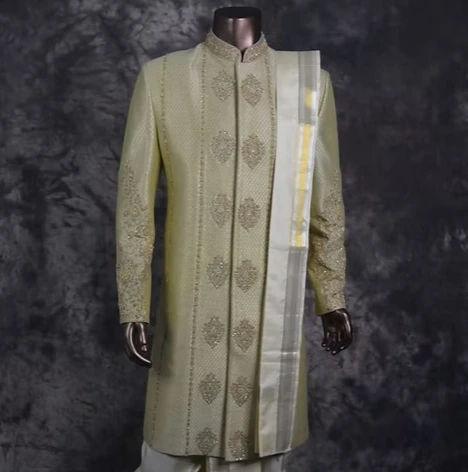
One of the oldest fabrics of India that screams luxury at Indian weddings is the Banarasi silk. Derived from Varanasi, a historical city of India, this luxurious silk fabric is famous for its elaborate woven patterns and often includes gold or silver zari embroidery. The Banarasi silk is not just another fabric; it is a fabric of history and Indian craftsmanship.
What Makes Banarasi Silk Unique?
Banarasi silk fabric is luxurious and heavy. The fabric features an exquisite and detailed embroidery with traditional patterns of paisleys, floral or Mughal-inspired styles. It is also considered to be an heirloom piece due to its high festive value.
Ideal Occasions for Banarasi Sherwanis
A Banarasi silk sherwani would make a great choice for:
The main wedding ceremony with Pheras and varmalas, where traditions steal the spotlight.
At the wedding reception party, where you may wish to make a grand entry.
Winter weddings and grand indoor celebrations, where the weight is not an issue.
Pros & Cons
With heavy weaving, the sherwanis made from Banarasi silk have a very regal look. As they are made from premium quality material, this fabric is rich in appearance and is visually very impactful. However, these sherwanis tend to be very heavy and quite expensive. Since they are less comfortable to wear for a long time, it is especially not recommended for summer weddings.
Tissue vs Raw Silk vs Banarasi Silk: Quick Comparison
Here is a quick side-by-side comparison of all three sherwani cloth materials:
Feature | Tissue Fabric | Raw Silk Fabric | Banarasi Silk Fabric |
Weight | Lightweight | Weighs medium to heavy | Heavy |
Finish | It has a soft metallic shimmer. | The fabric is matte and has a textured finish. | It is rich with intricate zari work. |
Comfort | Highly breathable and hence, very comfortable. | Moderately comfortable. | Less comfortable for long wear. |
Structure | It has a soft drape and is, hence, less structured. | Firm and structured. | Very structured, therefore, it holds the shape well. |
Best Occasion | Day weddings and day functions like mehendi and haldi. | Good for traditional ceremonies as well as evening gatherings. | Great for grand receptions and the main wedding ceremony. |
Weather Suitability | Perfect for summer weather and outdoor events. | Great during mild weather. | Made for the winter weddings and indoor events. |
Which Sherwani Fabric Suits Your Wedding Style Best?
Are you still undecided and confused? Here's how different fabrics fit different kinds of weddings:
Based on the occasion (day vs night wedding)
For an outdoor day wedding, the Tissue fabric is ideal. For an indoor ceremony that requires adherence to traditions, opt for a Raw silk sherwani. However, if you are planning to rock it like royalty at your wedding celebration, then it's Banarasi silk.
Based on climate (summer vs winter)
Summer grooms should preferably go for a Tissue fabric sherwani. However, if your wedding is taking place during the mild weather, Raw silk will work perfectly for you. If your big day falls during winter, consider going with Banarasi silk fabric.
Based on personal style (minimal vs royal)
Individuals with a minimalist style will benefit from a Raw silk sherwani. Grooms with a modern outlook should consider getting a Tissue Sherwani for their wedding attire. However, individuals who love the rich traditional feel can choose the Banarasi silk.
Based on comfort preference
Grooms with high mobility requirements should opt for tissue fabric since it is lightweight. Raw silk will fit individuals who want something more than lightweight yet not quite heavy. Banarasi silk works best if you want to go for a more royal and historical look rather than focusing on comfort.
Based on the budget
If you are a groom on a tight budget, go for Tissue or Raw silk. However, if you have extra cash, then Banarasi silk is best.
Styling Tips for Each Fabric
Here is the catch. As a groom, wearing a Sherwani should not be the end goal. You need to style it accordingly, too. Here are some tips for each of these three fabrics:
1. Tissue Sherwani
Wear a contrasting dupatta or jewel-toned stole for a touch of luxury. In addition, embroidery should be kept to a minimum, allowing the natural shine of the fabric to enhance its beauty. Finish the look with a light Mojari that rounds off the outfit perfectly.
2. Raw Silk Sherwani
If you want your Sherwani design with a delicate zari embroidery or thread embroidery, the Raw silk fabric is the best. You can go for elegant colours such as ivory, the classic or maroon, or navy, which are trendy. Accessorise with a structured safa and traditional mojaris for an everlasting impression.
3. Banarasi Silk Sherwani
While styling a Banarasi silk sherwani, allow the elegance of this material to be highlighted, and hence, avoid excessive accessories. A dupatta wrapped over one shoulder and gold mojaris are sufficient for this outfit.
Final Thoughts: Which Sherwani Fabric Should You Choose?
To conclude, while you are selecting the fabric for your Sherwani, consider factors like comfort and personal preference. Tissue Sherwanis become the top choice if you want a comfortable yet trendy look. If you are someone who wants the classic look, but a versatile sherwani, opt for the Raw silk fabric. However, if you are a groom who wants every eye on himself from the moment you walk in, the Banarasi Silk will be your best bet to make a statement. It has a rich, traditional grandeur along with an elegant design.
For 25+ years, Kaadambini has been assisting bridesgrooms in choosing the perfect sherwani for themselves. We have curated a wide range of sherwanis made from Tissue, Raw Silk, and Banarasi Silk fabric. Stop by our sherwani store in Hyderabad to get help in picking the perfect sherwani for yourself.
Frequently Asked Questions
1. Which sherwani fabric is best for summer weddings?
Tissue fabric will be the most suitable fabric for a summer wedding. Being very light and airy, it ensures maximum comfort even in hot climates. Additionally, it also looks very fine in an outdoor ceremony.
2. Is a Banarasi silk sherwani too heavy for grooms?
Banarasi silk might be quite heavy for some grooms, especially when the ceremony lasts long. Nevertheless, it can be great for indoor and cold-weather weddings. You just need to be ready for it!
3. Does a raw silk sherwani look premium enough for weddings?
Certainly, you can! Raw silk has a unique natural structure that perfectly captures the light and looks extremely elegant in pictures.
4. Can a tissue sherwani be worn for receptions?
Sure. But, for a refined look, combine Tissue sherwanis with elaborate embroidery so as not to look underdressed at the reception.
5. Which fabric is best for humid or outdoor weddings?
Tissue fabric will perfectly suit your needs in humid and outdoor conditions since this material is airy and light.
6. Which sherwani fabric photographs best in daylight?
Both tissues and raw silks are very photo-friendly sherwani cloth materials. The first one has an amazing metallic sheen effect, whereas the second one has a rich texture.
7. Does fabric affect the fit and structure of a sherwani?
Of course! Sherwanis made of Banarsi and Raw silks tend to have better shape, whereas Tissue sherwanis can be slightly loose and flaccid.